Karura Forest, gazetted in 1932, was planted with fast-growing exotic trees to supply colonial timber and fuel. However these non-native species degrade biodiversity and offer poor habitat for indigenous wildlife.
Indigenous trees are better adapted to local conditions, support rich biodiversity, and act as resilient carbon sinks and natural purifiers – echoing Prof. Wangari Maathai’s conservation vision.
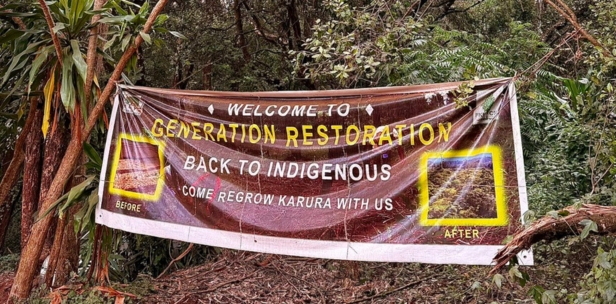
Over a decade ago, KFS and FKF launched a long-term restoration programme to replace exotic plantations and restore Karura’s natural dry upland ecosystem.
Under a Participatory Forest Management Plan, KFS oversees inventory, contracting, and logging with contractors paying for and removing felled exotics targeting 15 hectares per year.
Replanting starts immediately using native seedlings from the FKF nursery, timed to the rainy seasons and adapted to ecological and logistical constraints.
A patchwork removal strategy minimizes disruption, allowing wildlife to take refuge in adjacent areas.
FKF’s scientific and logistics teams closely monitor both ecological and physical progress.
Public safety is safeguarded through restricted access and low-traffic operations; forest access remains open outside work zones. The public is invited to join replanting efforts.
Result: Indigenous forest cover has grown from 25% to over 60% in just 15 years.