Mandate and Activities of the Ecosystem Biodiversity Department: Karura Forest as a Model for Urban Montane Conservation.
The Ecosystem Biodiversity Department (EBD) operates as the core scientific organ dedicated to realizing the long-term science vision for Karura Forest: to establish it as both a premier model of urban forest conservation and a leading incubator for urban montane forest biodiversity knowledge. Situated within a rapidly developing metropolitan area, the department’s mandate extends beyond passive protection to active, science-based management designed to enhance the forest’s ecological resilience and functionality. The EBD’s activities are systematically organized into three complementary streams: Know Your Resource, Improve Your Resource, and Use Your Resource.
Stream 1: Know Your Resource – Data Collection, Management, and Analysis
Effective conservation is predicated on a comprehensive, factual understanding of the resource. The EBD is responsible for establishing and maintaining a robust ecological knowledge base, facilitating fact-based adaptive management.
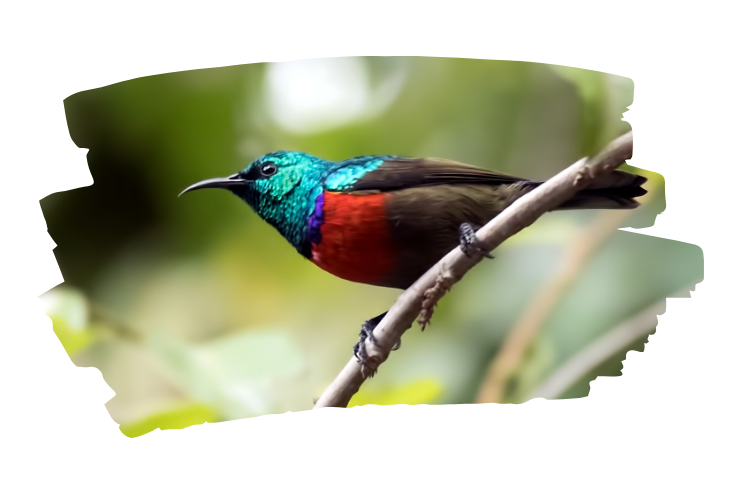
A central function is the systematic ecological data collection across various trophic and environmental levels. This activity feeds and maintains a suite of nine specialized databases essential for long-term monitoring. These include records on plantlife composition and distribution, regeneration dynamics, wildlife monitoring (e.g., via KaruraCams), wildlife mortality and morbidity statistics, targeted Colobus population studies, avian diversity (birdlife), essential meteorological data, an academic bibliography relating to the forest, and specific records of rare or threatened species.
Furthermore, the EBD is charged with the enhancement of these databases. This involves not just data entry, but the development of advanced visualizations and analytical tools that convert raw ecological observations into actionable insights for the management team. This rigorous data management underpins all strategic conservation decisions. The department also actively attracts and supports academic pursuits, providing valuable data, logistical aid, and location access to students and researchers, thereby expanding the depth of knowledge concerning this urban montane ecosystem.
Stream 2: Improve Your Resource – Science-Based Regeneration and Management
This stream represents the translation of ecological data into tangible, positive changes within the forest landscape, focusing squarely on science-based forest regeneration.
The department is responsible for the overall planning, implementation, and rigorous documentation of the Karura regeneration program. This goes beyond simple tree planting, involving targeted restoration efforts guided by data on species suitability, historical ecology, and site-specific needs. Key activities include the active management of invasive alien species and the systematic restoration of degraded areas using locally-sourced indigenous flora.
A crucial supporting role is the planning and implementation of the nursery program. This involves coordinating propagation efforts to ensure the quantity, species composition, and genetic viability of seedlings precisely align with the requirements identified by the regeneration plan. This ensures the appropriate ecological repair of the forest, maximizing the potential for successful long-term establishment of the forest canopy and understorey. The EBD thus ensures that conservation actions are not arbitrary, but ecologically sound and fully documented as a model for urban forest restoration elsewhere.
Stream 3: Use Your Resource – Outreach, Advocacy, and Visibility
The final stream focuses on leveraging the scientific findings and the forest’s unique status to promote conservation awareness and build strategic collaborations.
The EBD actively seeks to develop partnerships with conservation and academic organisations. These formal alliances are vital for resource sharing, joint research ventures, and enhancing the technical capacity of the department. This ensures that Karura remains integrated into the broader national and international conservation discourse.
Finally, the department is tasked with increasing Karura’s visibility as a biodiversity knowledge hub. This involves proactively disseminating the results of ecological studies and monitoring programs to a wider audience, including the media, policy-makers, and the general public. Through outreach, advocacy, and educational engagement, the EBD champions the value of urban montane forests, utilizing its evidence base to secure continued institutional and public support for the forest’s ongoing protection and restoration.